The Brother Technical Support email is temporarily unavailable. Please call 1-877-276-8437 for support, M-F, 9am - 6pm EST
Can Your Labels Keep Up with the Modern Data Center?

The data center sector is undergoing what many analysts have called an infrastructure investment supercycle, with global data center capacity expected to grow rapidly through the end of the decade. And what’s driving much of that growth? Artificial intelligence.
In the world of data center cable management, accurate fiber and cable identification has always been essential for maintaining uptime, supporting traceability, and reducing costly mistakes. But as AI infrastructure introduces higher temperatures, greater density, and accelerated deployment schedules, the demands on labeling processes are increasing too.
What worked in traditional environments may no longer be enough.
AI is raising the stakes for data center labeling
Turning up the heat on data center cables
AI data centers create a unique set of challenges for data center cables and the systems used to identify them.
At the top of the list is heat. Modern AI servers pack tremendous computing power into increasingly dense rack configurations. Higher GPU (Graphics Processing Unit) counts, larger power requirements, and advanced cooling systems enable unprecedented performance, but they also create more demanding operating conditions throughout the facility.
For labeling systems, high temperatures can accelerate deterioration. Labels that fade, curl, peel, or lose adhesion can quickly become difficult to read, making future maintenance and troubleshooting more complicated.
High-density infrastructure increases downtime risk
The growth of AI is also driving dramatic increases in infrastructure density. Today’s AI clusters often require:
- More fiber connections
- Higher port density
- Larger patch panels
- Thousands of labeled cable connections
- Greater complexity in data center wire management
As modern data centers scale, accurate, durable identification becomes more than an organizational convenience. It becomes an operational necessity.
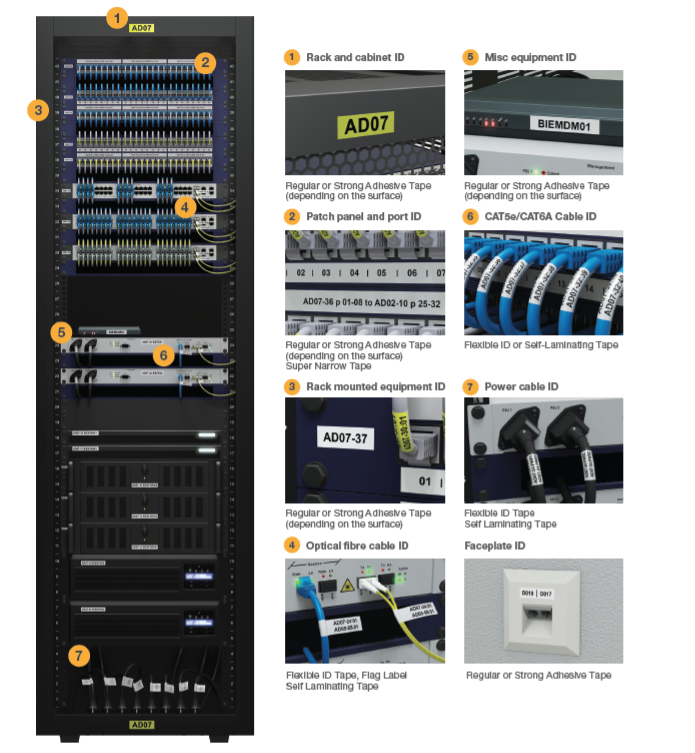
In high-density environments, a single unreadable label can slow troubleshooting, extend outage windows, or increase the risk of disconnecting the wrong cable. Every minute spent tracing connections or verifying cables adds time to repairs, impacting both productivity and uptime.
Built fast, with labels not made to last
To meet growing demand, many hyperscale and AI-focused facilities are being deployed on aggressive timelines.
When construction schedules are compressed, temporary or lower-quality labels may be used to keep projects moving. The challenge is that these “temporary” solutions often remain in place long after deployment is complete.
Over time, this can create a range of operational issues:
- Labels fade or become illegible
- Adhesives fail in demanding environments
- Maintenance and upgrades take longer
- Fiber tracing becomes more difficult
- Compliance inspections become more challenging
- The risk of accidental cable removal increases
- Re-labeling projects add labor and replacement costs
What appears to be a minor issue during installation can become a big operational burden years later.
What makes a label AI-ready?
As organizations revisit their data center labeling standards for AI infrastructure, durability should be a primary consideration. While labeling may seem like a small part of an AI deployment, durable identification can have a huge impact on maintenance efficiency, troubleshooting speed, and long-term operational costs.
The most effective labeling systems are designed to:
- Remain legible in high-temperature environments
- Resist abrasion, moisture, and common chemicals
- Maintain adhesion over years of operation
- Withstand moves, adds, changes, and routine maintenance
- Support consistent data center cable labeling standards across facilities
- Align with broader network cabling standards and operational best practices
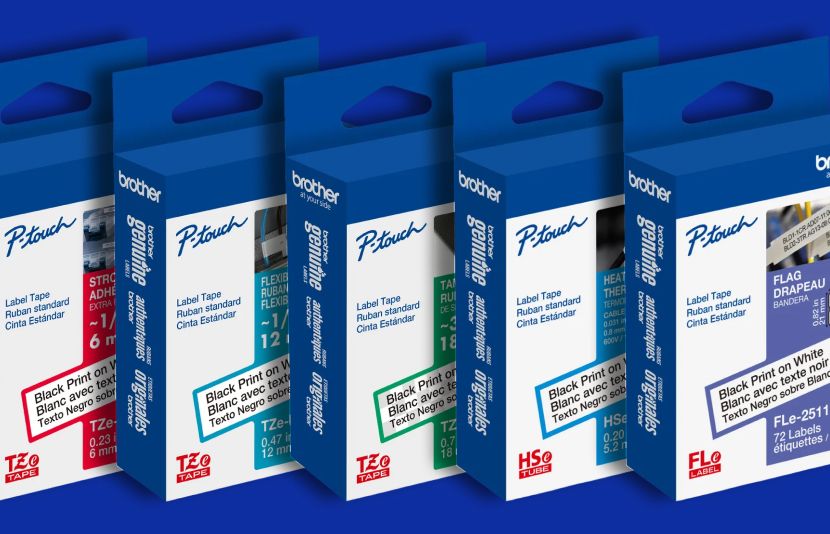
Brother Genuine TZe and HGe laminated tapes offer industrial-grade heat, abrasion, and adhesive resistance, making them ideal candidates for high-density datacom infrastructure.
Raising the data center labeling standard for the AI era
The reality is simple: AI is reshaping the data center landscape. That means organizations may need to rethink long-established approaches to infrastructure identification and labeling.
The most durable industrial labeling solutions use laminated construction and thermal transfer printing technologies. Brother Genuine TZe and HGe laminated tapes, for example, create long-lasting labels that can withstand heat, moisture, abrasion, and other environmental challenges common in demanding datacom environments.
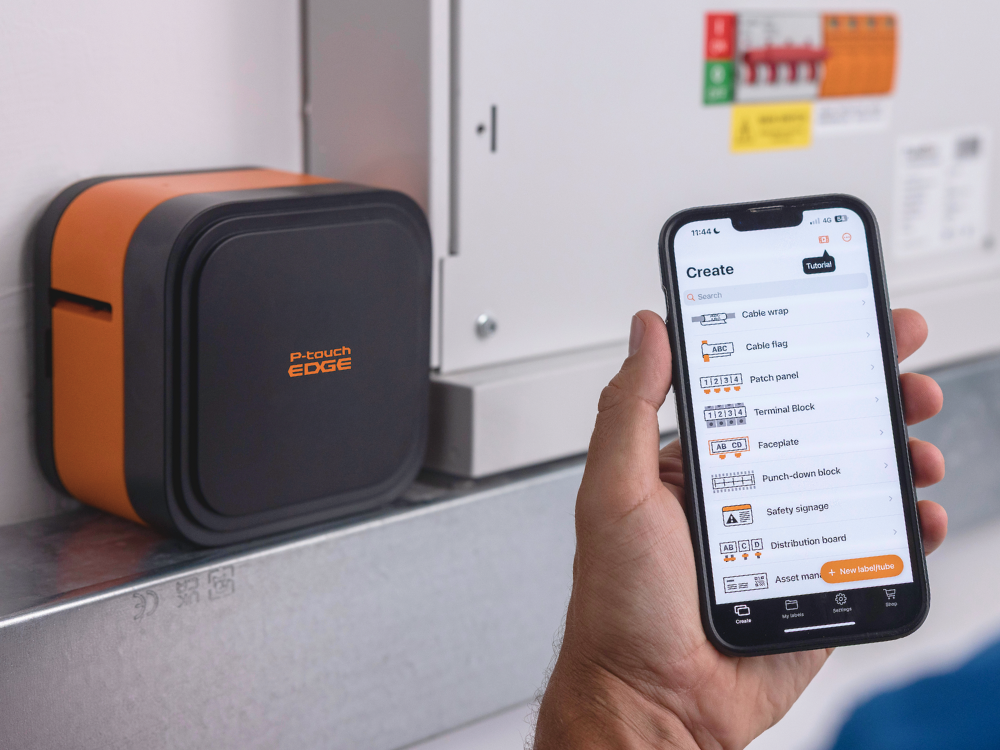
Just as important as durability is the ability to deploy labeling quickly and accurately. Brother industrial labeling solutions give teams the flexibility to design and print labels from mobile devices, directly from handheld printers, or by importing data from existing databases for on-demand printing. Wireless connectivity and centralized data access help streamline workflows, reduce manual entry, and enable technicians to label assets wherever work is being performed.
Whether applied to cables, fiber, racks, cabinets, or equipment, durable labels help ensure accurate identification throughout the AI infrastructure lifecycle — supporting faster troubleshooting, more efficient maintenance, and greater confidence in increasingly high-stakes environments.
Explore AI-ready labeling solutions
Taking a hard look at your labeling approach is an important step toward improving data center cable management and supporting long-term reliability in AI infrastructure.
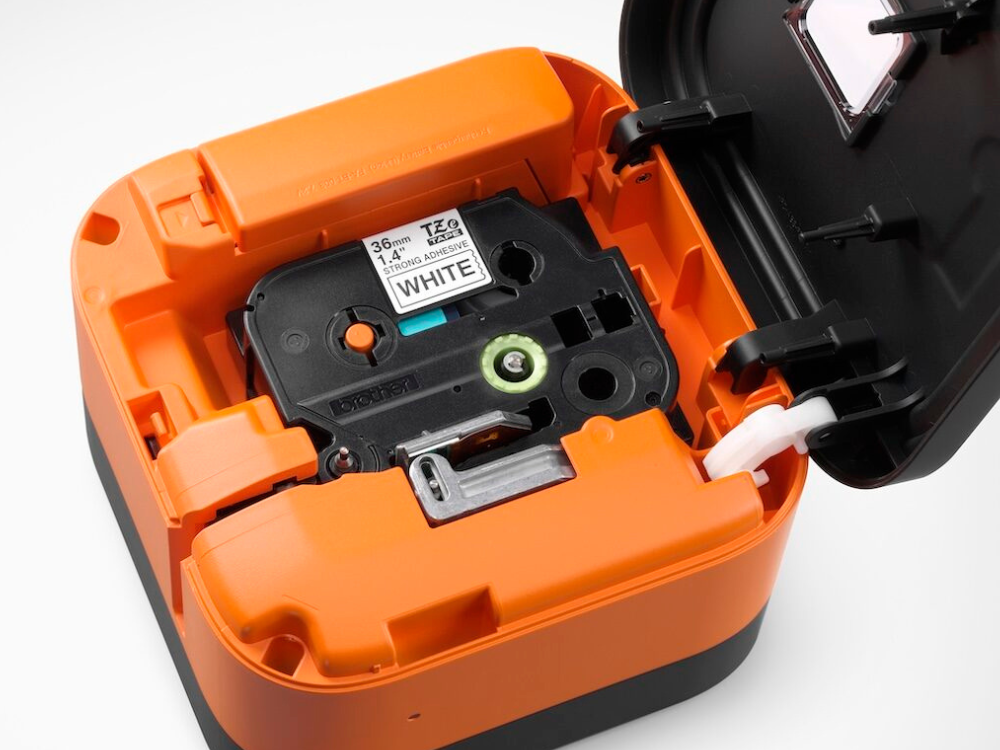
Explore durable industrial labeling tapes
See how Brother P-touch industrial tapes perform in high-density environments.
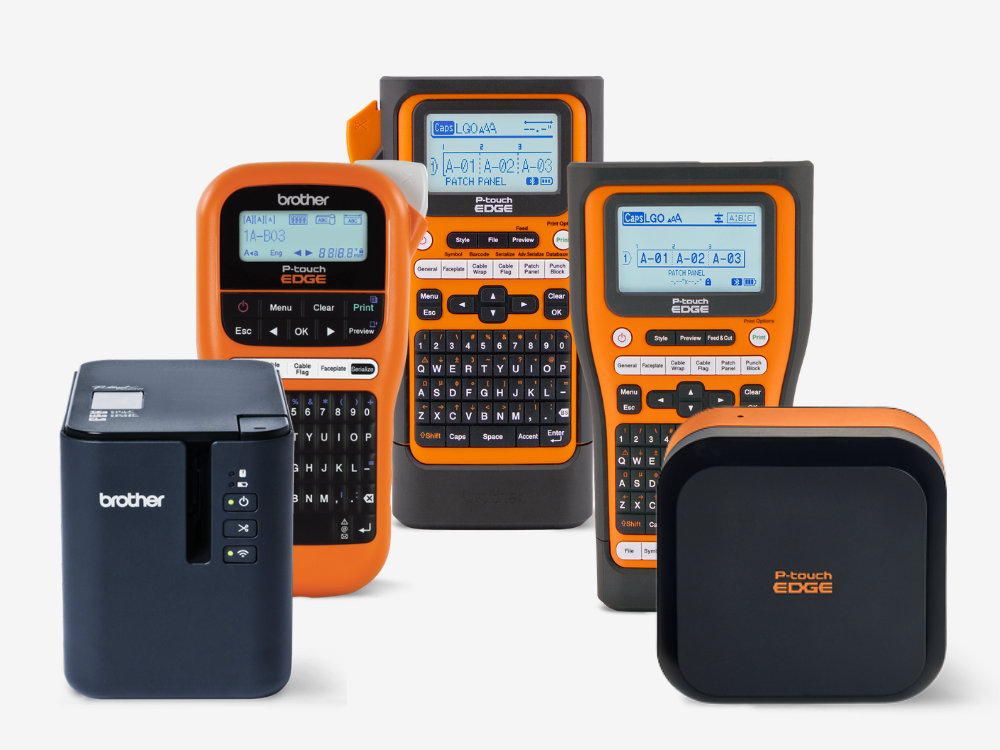
Discover the full industrial labeling lineup
Explore a portfolio of proven labeling tools for demanding environments.
Brother Genuine TZe and HGe laminated tapes undergo standard temperature and durability testing. Specific operating parameters and performance may vary based on environmental conditions, surface materials, and installation methods. Customers should verify tape compatibility with their specific facility requirements and thermal thresholds.
Tags list

Talk to an expert
Set up your virtual product demo, training, or meeting today.
Schedule a digital demo