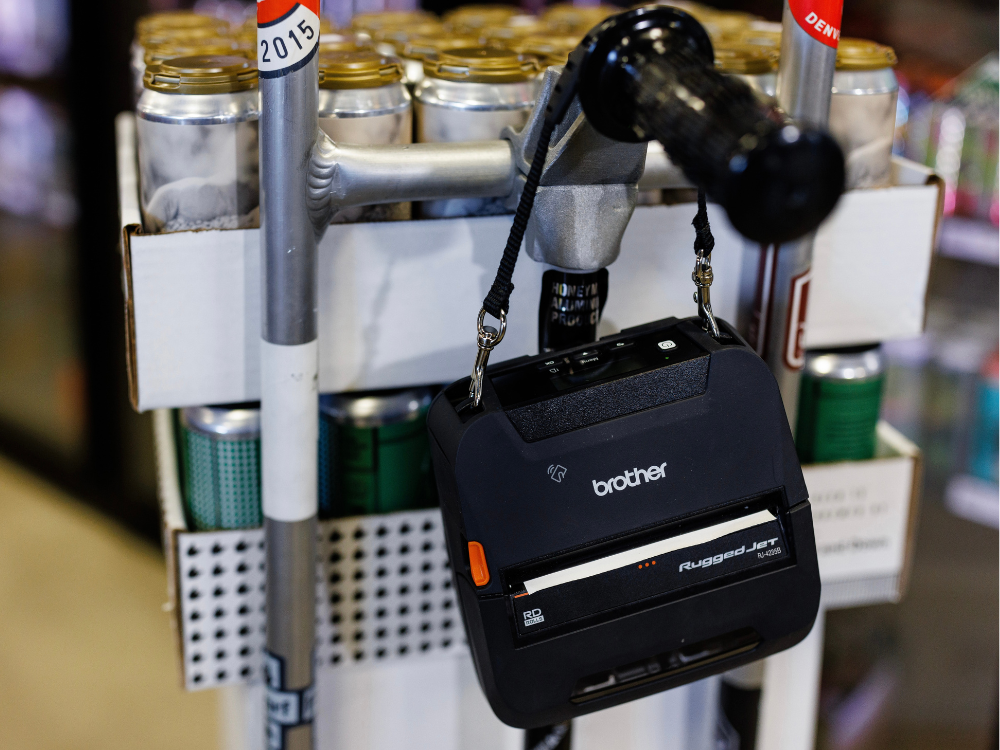
Direct thermal printing is widely used across mobile and mission-critical environments because of its speed, reliability, and operational efficiency. The inkless design and low-maintenance architecture make it an ideal choice for field service, retail, logistics, and public safety environments, and other workflows that demand consistent output in challenging conditions.
This white paper explains how direct thermal printing works, how direct thermal printers achieve reliable performance under environmental stress, and the technical considerations that organizations should understand when evaluating direct thermal printing solutions. A supporting section provides an overview of direct thermal media types, coatings, and selection best practices to ensure longterm durability and optimal print results.
The Chemical and Mechanical Aspects of Direct Thermal Printing
Direct thermal printing uses heat, not ink, toner, or ribbons, to produce images. A direct thermal printhead heats precise points on chemically coated media, triggering a reaction that forms a stable, legible image. This inkless process eliminates many of the moving parts and consumables that cause failures in other print technologies.
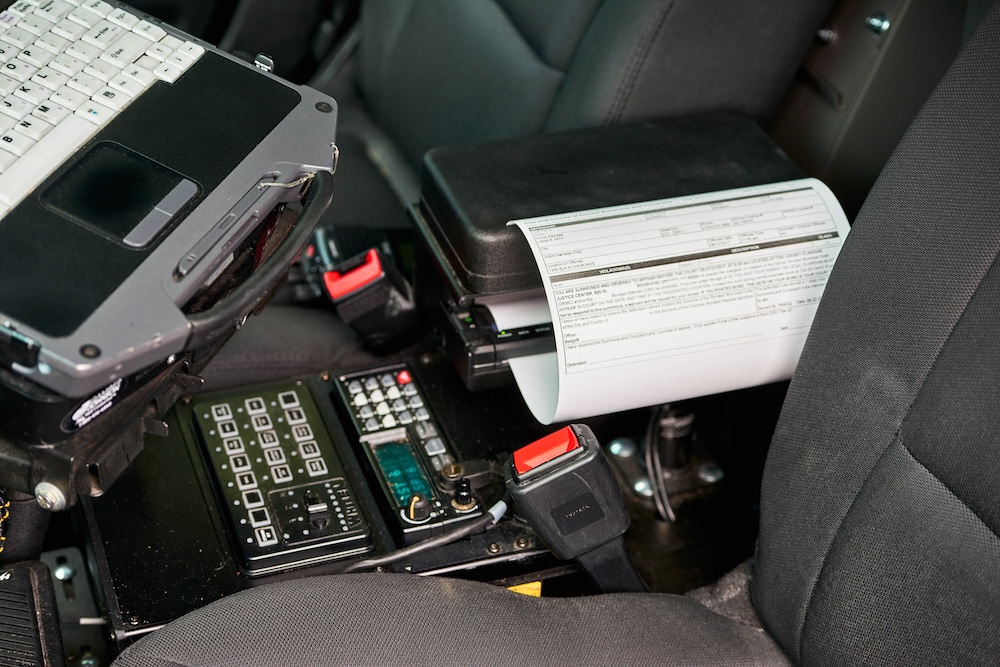
The result is a printing system used in many industries and environments due to its versatility, speed, and efficiency. Applications include:
- Safety, cable, barcode, and shipping labeling
- Reports, eCitations, receipts, and billing
A direct thermal printer creates images through a sequence of controlled thermal reactions:
1. Heat Application
The printhead heats specific areas of the media.
2. Chemical Activation
Heat causes dye and developer molecules in the media coating to melt and bond.
3. Image Formation
The reaction produces a dark, high-contrast mark.
4. Image Protection
If the media has a top coating, the printed image gains resistance to moisture, abrasion, UV light, and chemicals.
What is Direct Thermal Media?
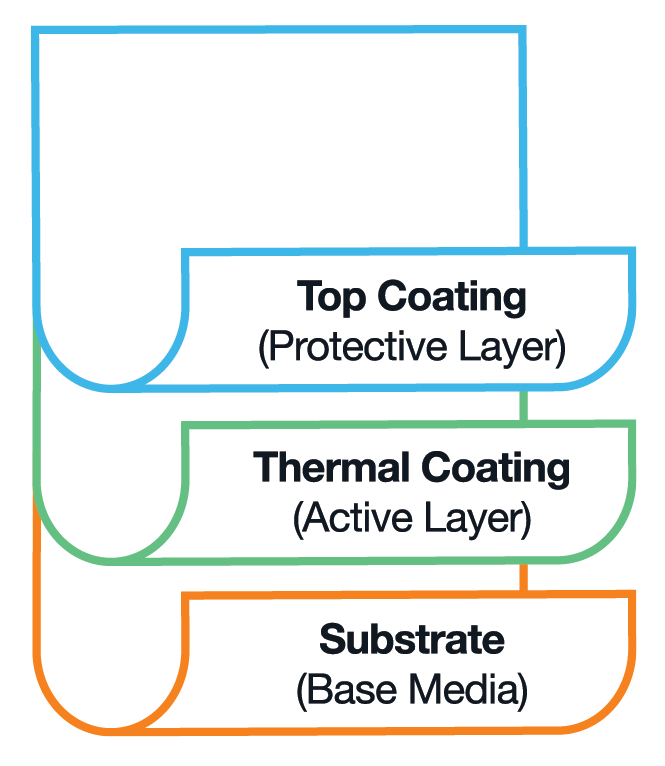
Direct thermal media consists of multiple engineered layers working together to produce sharp, consistent images:
Layer Structure of Direct Thermal Media
-
Substrate (Base Media): The foundation layer—paper or synthetic polymer (e.g., polypropylene)—designed with an exceptionally smooth surface to support uniform heat transfer.
-
Thermal Coating (Active Layer): Contains a leuco dye and developer that react to heat.
-
Top Coating (Protective Layer): Shields the image from moisture, light, abrasion, and chemicals, greatly improving durability and longevity.
Understanding Direct Thermal Media Quality
Not all direct thermal media perform equally. The quality and formulation of direct thermal labels and paper directly impact document durability, archival life, and professional presentation.
| Application Type |
Typical Thickness |
Expected Lifespan |
Use Cases |
| POS Receipts / Fax Paper |
48–60 microns |
<5 years |
Retail receipts, short-term records |
| Standard Thermal Paper |
80–90 microns |
7–20 years |
Repair estimates, work orders, service records, price quotes |
| Premium Thermal Paper |
90–100 microns |
20–25 years |
Asset records, delivery documentation, contracts, compliance documents, certificates, eCitations, warrants |
| Synthetic Media |
Varies |
20+ years |
Outdoor use, moisture exposure, safety documents, asset labels, outdoor labeling, delivery notices |
The Evolutions to Phenol-Free Direct Thermal Media
Traditional direct thermal coatings relied on phenolic developers like BPA and BPS, which raised hormone-disruption and environmental concerns and prompted tighter regulations in the U.S. and EU. Manufacturers have rapidly moved to phenol-free thermal media with alternative chemistries (such as urea-, urethane-, and vitamin-C-based systems). These alternatives deliver comparable imaging performance, work as drop-in replacements in existing printers, and are now expected in the EU and increasingly specified by U.S. retailers, logistics providers, and institutions under standards like California’s Proposition 65.
Direct Thermal Sensitivity: Matching Media to Printer
Two sensitivity factors determine how direct thermal media performs:
- Dynamic Sensitivity: How quickly the media reacts to short bursts of heat during printing. High sensitivity enables faster printing, reduces wear on the printhead, extends printhead life, and has a lower energy consumption.
- Static Sensitivity: The media’s resistance to long-term heat exposure after printing. Media requiring higher heat to image will better resist fading when later exposed to high temperatures.
TIP!
For direct thermal paper specifically, if you can’t tell which side is coated, rub your fingernail against it in an inconspicuous place. The rubbing generates heat, which produces a mark on the coated side. No mark appears when you rub your fingernail on the uncoated side.
Best Practice
Pair printers with media that images at lower heat for cold or humid environments; use higher-heat media for applications where long-term fade resistance is critical.
Important Consideration
Images that are not fully developed during printing are more likely to fade over time. While lowering the contrast setting on a direct thermal printer can increase print speed, it also reduces the heat applied to the media—resulting in incomplete image formation. For optimal longevity and archival quality, direct thermal printers should operate at higher density or contrast settings to ensure the image is fully developed and permanently bonded to the media surface.
Media Matters
Matching the right media to the job is essential. Print quality depends on the interaction between the printer and the media, so using media designed for the specific application ensures the image develops correctly and maintains durability. Choosing the wrong media can reduce clarity or longevity, even when the printer is performing properly.
Why Organizations Choose Direct Thermal Printing
Direct thermal printers deliver several operational advantages that make them ideal for mobile, field, and high-volume applications:
- Exceptional Reliability: With fewer moving parts than inkjet or laser devices, and a direct media path, direct thermal printers experience fewer mechanical failures, jams, and misfeeds.
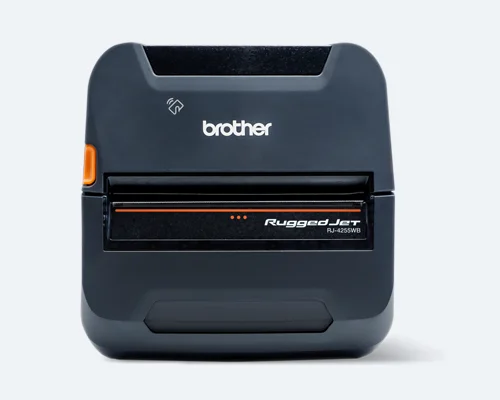
- True Portability: Compact, lightweight, and with multiple power options, direct thermal printers can operate anywhere. They are quiet, durable, and designed to withstand the vibration and environmental exposure that would disable traditional printers.
- Minimal Maintenance: No ink. No toner. No ribbons. No drums or nozzles to service. Direct thermal printers avoid nearly all consumable-driven failures, and their short, direct media path virtually eliminates jams—all while removing the hassle of managing consumables across distributed teams.
- High-Speed Performance: Direct thermal printers can produce documents at speeds up to 14 inches per second, enabling rapid transaction throughput without sacrificing image quality—essential for high-volume retail, logistics, and field operations.
- Environmental Resilience: When paired with premium direct thermal media, images can withstand temperatures up to 270°F (132°C) and resist UV exposure, rain, abrasion, and chemical contact. This makes direct thermal printing uniquely suited for documents and labels that must remain legible in harsh or unpredictable conditions.
- Cost Effective: When you factor the cost of inkjet cartridges and the longer lifespan of the printer, the long-term cost of operating direct thermal printers is much less than inkjet technology.
Brother Engineered for Performance and Reliability
Brother has been a trusted name in mobile and industrial printing for decades, and our thermal printing solutions are engineered to meet the demands of the most challenging environments. From compact portable printers designed for field operations to high-volume desktop models built for retail and logistics, Brother delivers consistent performance, professional output, and long-term value.
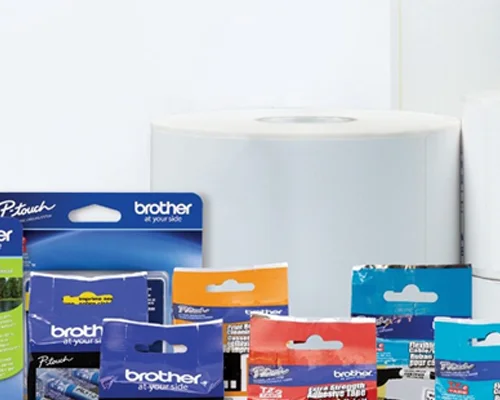
Brother Certified Media is rigorously tested to ensure optimal compatibility, image quality, and printhead longevity. Our standard, premium, and synthetic thermal media options are formulated to resist environmental degradation while maintaining the sharp, professional appearance your organization demands.
Get the white paper